

Members of Pilobolus pose outside of The Joyce Theater in NYC following the 2026 season. Top row, left to right: Hannah Klinkman (Dance Captain), Alexis Cruz-Castro (Dancer), Anouk Otsea (Dancer); Bottom row, left to right: Connor Chaparro (Dancer), Ryan Hayes (Dancer), and Isaac Huerta (Dancer).
Pilobolus premiered Trips at The Joyce Theater in New York City for a three-week residency from June 23 to July 12, 2026. Two stellar programs delighted audiences and included a new format and a new work, Virtuous & Vicious, a quartet inspired by conversations surrounding mental health. The piece features music by Luke Styles, lighting by Thom Weaver, and costumes by Márion Talán de la Rosa.
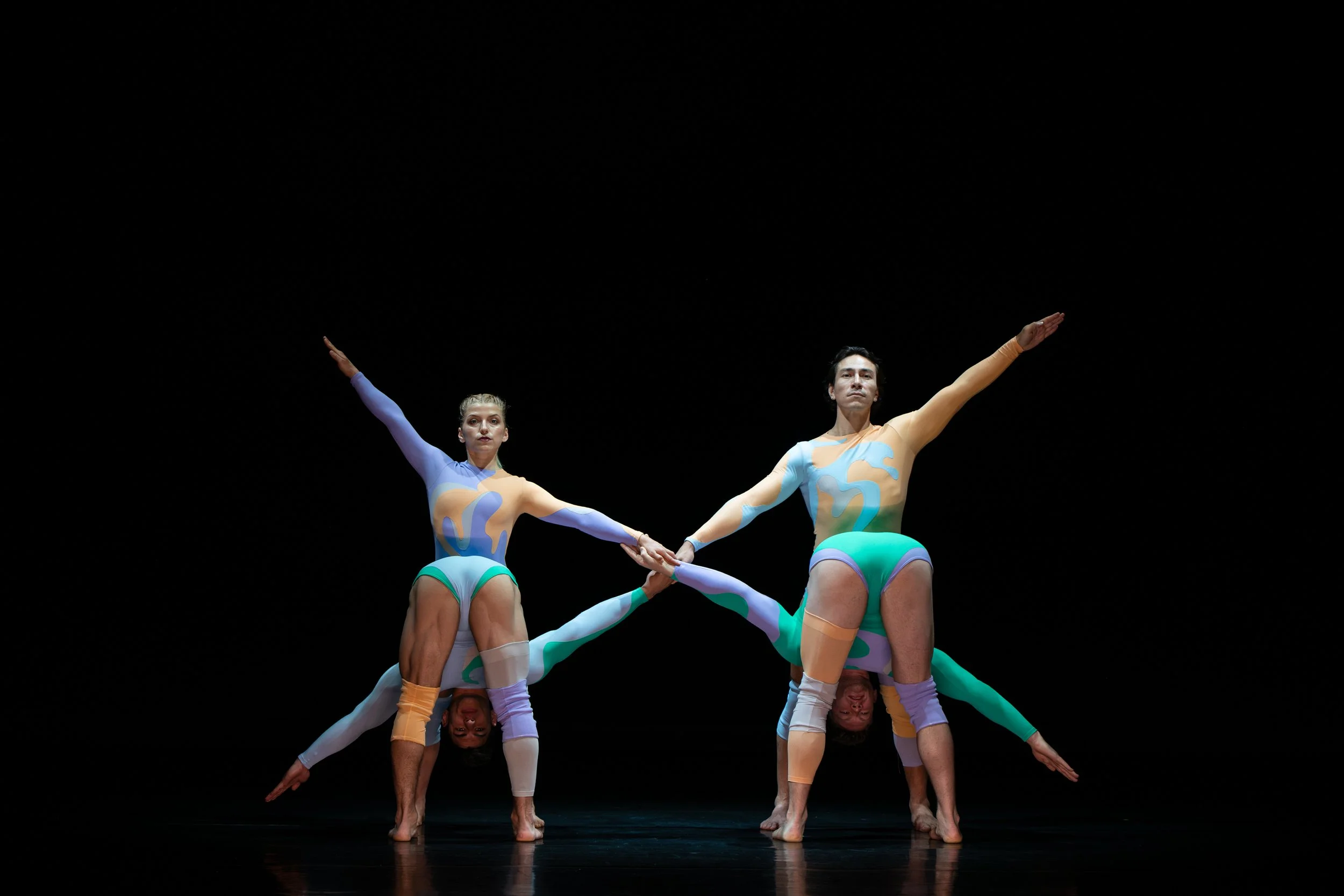
New work Virtuous & Vicious - Photo by Emily Denaro
A children’s matinee, curtain chat with Couples Therapy’s Dr. Orna Guralnick, plus Pride night to raise support for Dancers Responding to AIDS (DRA) also featured.
PRESS HIGHLIGHTS…
“An accessible program featuring a standout performer who stole the show and strong partnering work that continues to redefine what dance means.” - Ballet Herald
“A marvelous evening of ideas, imagination, skill and beauty.” -Theater Pizzazz
“Few ensembles can match its breathtaking physical achievements, but fewer still can make those achievements feel so deeply human. More than fifty years after redefining what dance could look like, Pilobolus continues to remind audiences that the body’s greatest feats are rarely accomplished alone.” - Art Fuse
“I’m usually ready for even the most impressive dance performances to wrap up—my attention falters, my energy dwindles. But when the curtain closes, I linger in my seat, not quite ready for this trip to end.” - Broadway World
Additional Coverage:
Pilobolus dance company tests the limits of athleticism, physicality
Interview with Artistic Director Matt Kent and Dancer Anouk Otsea by Dave Carlin of CBS2